
Business owners and online shoppers face a common frustration. You see a review vanish, or your own content gets flagged, and you have no idea why it happened. It feels like the system works behind closed doors. This lack of transparency leads to confusion about whether the platform can be trusted or if the algorithm is simply broken.
The reality is that Trustpilot’s fake review detection is not a broken system. It is a high-scale security filter designed to process millions of data points every day. By understanding how this technology identifies patterns, you can stop guessing and start operating within the rules of the ecosystem.
The Trust Paradox: Navigating the Algorithm’s “Black Box”
The core problem is that the system operates at a speed no human can match. When a user submits feedback, the algorithm must decide in milliseconds if that input is legitimate. This creates a gap between user experience and platform security.
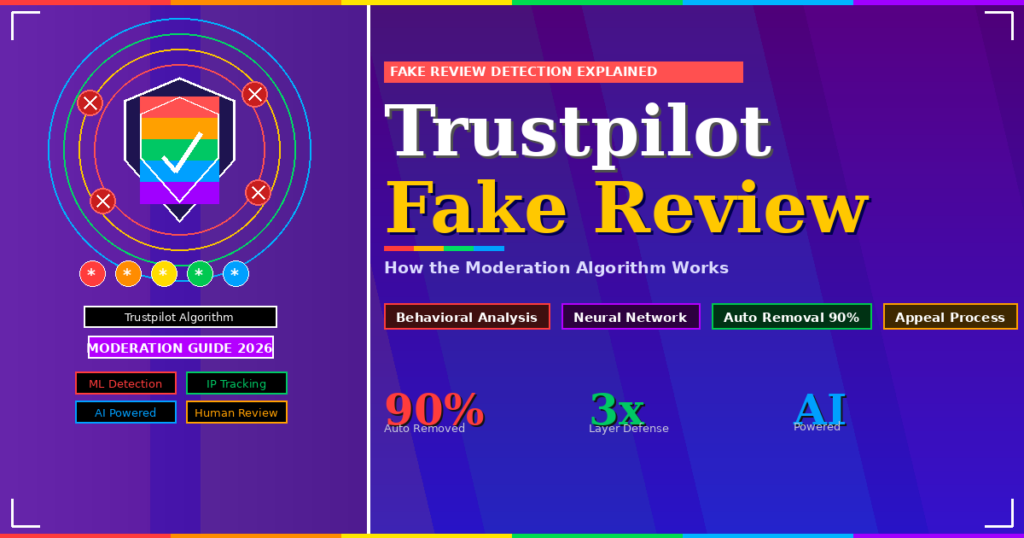
Trustpilot’s moderation system uses a combination of Machine Learning, Neural Networks, and Behavioral Analysis to filter content in real time. The goal is to detect review manipulation automatically before content goes live. This system balances the need for open feedback with the technical requirement to prevent fraudulent activity and coordinated attacks.
Most users view this as a black box. You submit a review, and the system either accepts it or flags it. When the system flags legitimate content, the result is frustration. At Bulk PVA Services, we see this constantly. Business owners get penalized for patterns they did not create, often because they do not understand what the algorithm is scanning for when it evaluates account and review data. To ensure your business operates with high-integrity assets, explore our verified account services to maintain a professional online presence.
The Multi-Layered Defense: How Automated Detection Works
The platform uses a three-pronged approach to maintain content integrity. It does not rely on a single trigger. Instead, it looks for layers of data to build a risk score for every single review.
- Behavioral Analysis: The system looks for patterns in how users interact with the site. It checks if the user has a history of posting reviews or if the account was created just to target one specific business.
- IP Anomaly Detection: The software tracks the location and network origin of the submission. If hundreds of reviews originate from the same network or a known proxy, the system flags them as suspicious.
- Device Fingerprinting: The algorithm identifies the hardware used to post the review. If a single device submits reviews for dozens of different companies in a short window, the system automatically rejects that content.
- Text Processing: The AI scans the content for language that mirrors known templates. If the review text matches patterns used by click farms, it gets pulled for human review or removed immediately.
This automated layer handles the bulk of the heavy lifting. It ensures that the majority of spam never reaches the public feed. It is a necessary function to keep the review ecosystem clean, even if it occasionally catches real users in the crossfire.
The Anatomy of a Flag: Why Legitimate Content Triggers the System
The biggest question for business owners is why legitimate reviews get caught in the filter. The algorithm is not looking for intent. It is looking for data patterns. If your legitimate customers act like bots, the system will treat them like bots.
For tips on maintaining high-quality digital security and protecting your accounts from being flagged as “bot-like,” refer to the FTC’s guide on Online Security.
| Trigger Type | What the Algorithm Sees | The Business Reality |
| Temporal Spike | A rapid increase in reviews within an hour. | A customer sent a blast email asking for feedback. |
| Geo-Location | Multiple reviews from one IP address. | A business has an office-wide Wi-Fi network. |
| Device Match | Multiple reviews from one specific device. | A manager let customers use a tablet to post reviews. |
| Content Match | Identical phrases across different reviews. | Customers used the same words to describe a common service. |
The algorithm views these scenarios as coordinated manipulation. When you trigger these filters, your TrustScore becomes volatile. Understanding these mechanics is the first step in protecting your reputation. As experts at Bulk PVA Services, we emphasize that businesses must diversify their review acquisition methods and use robust account structures to avoid these automated traps.
Human-in-the-Loop: Supplementing the AI with Content Integrity Teams
Automation is fast, but it is not infallible. The platform relies on a Human-in-the-loop model to handle the nuances that code cannot fully grasp. While the software acts as the first line of defense, a dedicated team of specialists provides the final judgment.
These teams do not monitor every single post. Instead, they focus on cases that fall into the gray areas. When a user flags a review or when the automated system marks content as suspicious but inconclusive, the case moves to human review. For businesses concerned with general internet safety and preventing unauthorized access to their own data, visit CISA.gov for resources on building a resilient cyber framework.
The human team also reviews appeals. If your content was flagged incorrectly, this is the layer that evaluates your explanation and evidence. At Bulk PVA Services, we advise our clients that when they communicate with these teams, they must provide clear facts rather than emotional claims. A precise, evidence-based appeal is far more effective than a generic complaint about unfairness.
Modern Security: The Shift Toward Generative AI Detection
The technological landscape changed significantly in the last year. The platform now utilizes Generative AI to enforce policies at scale. This is a massive upgrade over older methods that only looked for simple keywords.
This new technology does not just scan for bad words. It understands the intent behind the language. It can identify impersonation, harmful misinformation, and abusive behavior by comparing text against known patterns of misuse. Because of this proactive scanning, the platform now removes over 90% of fake reviews automatically.
This is not a future projection. It is the current reality. By automating the detection of policy breaches, the platform processes content faster and with more consistency than manual teams ever could. This makes the review ecosystem cleaner, even if the pace of change makes it harder for businesses to keep up without a strategy.
Conclusion
Understanding the moderation algorithm is not about finding a way to beat the system. It is about understanding the digital environment where your business lives. The algorithm is a tool built to filter out noise and fraud, not to punish legitimate players.
When you know how the system scans for patterns, you can adjust your own behavior to avoid accidental triggers. Focus on genuine engagement, avoid unnatural spikes in your review volume, and prioritize authentic customer feedback. If you treat the algorithm as a partner in maintaining the integrity of your brand rather than an enemy, you will find it much easier to build a sustainable and credible online presence.
Frequently Asked Questions
Does the algorithm target specific industries?
No. The system does not discriminate by industry. It scans for behavioral patterns and data anomalies regardless of the business type. However, industries that are highly competitive often experience more fake reviews, which causes the system to be more sensitive to anomalies in those sectors.
Can I get a review removed just because I do not like it?
No. You cannot remove a review simply because it is negative. The moderation system only targets reviews that breach platform guidelines, such as those that are fake, contain personal information, or are not based on a genuine experience.
What happens if the system incorrectly flags my review?
If a legitimate review is flagged, you should use the official appeal process. You will need to provide documentation or context to the Content Integrity team. Being factual and specific about why the review is legitimate is the best way to get a positive outcome.
How does the system distinguish between a real spike and a fake one?
The system uses temporal and network analysis. It looks for correlations between review timestamps and other factors like IP addresses or device IDs. If the activity does not correlate with organic customer behavior, it gets flagged for further investigation.
Is my TrustScore affected by the algorithm’s detection?
Yes. The algorithm is designed to ensure that your TrustScore reflects authentic customer feedback. If the system detects mass manipulation, it will remove the fake content, which can cause your score to change. This is the platform’s way of protecting the overall integrity of the score for all businesses.