
Table of Contents
ToggleThe Hidden Truth Behind “Guaranteed” Review Services
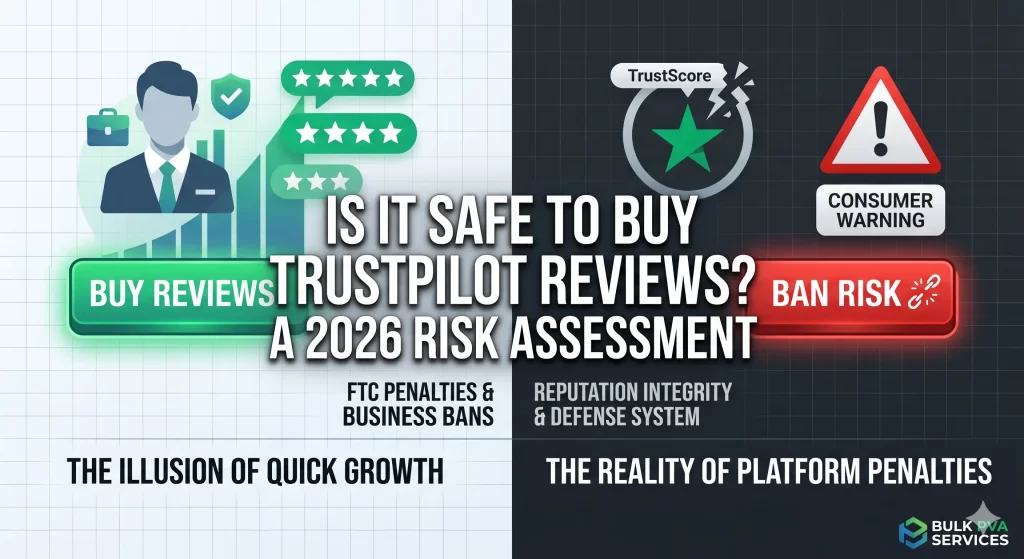
Every business owner wants a higher rating to attract more customers. Buying reviews seems like an easy way to fix a low score or beat a competitor. You might be asking yourself, is it safe to buy Trustpilot reviews? The short answer is no. Most services promising safe or verified reviews rely on Platform misuse that triggers immediate red flags.
At Bulk PVA Services, we emphasize that buying reviews is a gamble with your brand reputation. These services often utilize automated bots or fake accounts that lack any Digital integrity. When the platform detects these accounts, it does not just remove the fake reviews. It penalizes your entire Business profile by burying your rating and exposing your company to public scrutiny.
You are effectively paying someone to put your company at risk. Short-term gains disappear the moment the algorithm updates. When that happens, you lose the money you spent and the reputation you worked hard to build.
The Triple-Threat: How Automated Systems Flag Inauthentic Reviews
Trustpilot does not rely on a single check to find fake content. They use a sophisticated three-layer system designed to protect Reputation management standards. This system combines technology, community input, and human review to ensure your account remains compliant.
1. Automated Detection Technology
The system tracks Behavioral fingerprinting to identify patterns. It looks at the time of day reviews are posted and the frequency of interaction. If your account receives a spike in reviews from users who have no prior history, the system flags it instantly.
2. IP and Device Metadata
The platform monitors IP/device metadata for every user. If multiple reviews originate from the same IP address or device identifier, the system marks them as suspicious. Even if you use a proxy service, the platform detects the connection type and blocks the review.
3. Community and Content Integrity
The Content integrity team uses a mix of AI and manual review to analyze text. They look for Review invitation bias where the language is too similar across different entries. They also encourage customers to report fake content. This creates a trap where competitors or skeptical users can easily flag your bought reviews, triggering a manual audit of your entire profile.
The Regulatory Landscape: FTC Penalties and Consumer Warnings
Buying fake feedback is no longer just a violation of company policy. It is a legal liability. The Federal Trade Commission strictly monitors deceptive trade practices. Purchasing fake testimonials falls under this category.
If the platform detects widespread manipulation, it does not simply delete the reviews. It issues a public Consumer Warning label on your page. This label tells every visitor that your business has been caught attempting to mislead the public.
This warning remains on your profile for months or years. It destroys the credibility of your existing genuine reviews. The cost of this penalty is far higher than the initial cost of purchasing the fake content. Business owners who ignore these rules face potential civil penalties and legal consequences that extend well beyond the platform.
The Missing Link: Your Proactive Evidence Documentation Strategy
Most businesses operate in a reactive mode. They wait for a negative review or a fake submission to appear, and then they scramble to find evidence to prove it is illegitimate. This method rarely works because the platform requires specific Transactional proof that is often impossible to generate after the fact.
To win, you must implement a system for CRM documentation that captures data at the moment of the service. You need to align your sales process with your Business profile management goals. By attaching a specific invoice number or internal ticket ID to every review invitation, you create an undeniable link between the customer and their experience.
At Bulk PVA Services, we advise our clients to treat every customer interaction as a potential audit. This creates a foundation of Verified reviews that makes it nearly impossible for competitors to damage your reputation. When you have concrete Proof of transaction, you move from guessing to winning disputes with ease.
The table below contrasts the old way of dealing with reviews versus the modern, proactive standard.
| Feature | Reactive Approach (Old Way) | Proactive Strategy (New Standard) |
| Evidence Collection | Gathered after the problem | Automated at the point of sale |
| Response Time | Slow and emotional | Fast and evidence-backed |
| Success Rate | Low (He said vs She said) | High (Data-verified) |
| Compliance Risk | High (Potential flagging) | Low (Transparent process) |
Ethical Alternatives: Scaling Your Reputation Without the Risk
You do not need to cut corners to grow your Digital reputation. The most successful brands in the American market use systems that prioritize Consumer trust and consistency. These methods work because they follow the natural flow of your customer journey rather than trying to force it.
- Automated Review Invitations: Set up your CRM to send an email or SMS request 24 hours after a purchase. This ensures the experience is fresh in the customer’s mind.
- QR Code Integration: Place QR codes on your receipts, product packaging, or at your point of sale. This makes the path to leaving a review frictionless.
- Feedback Loops: Use a pre-review survey. If a customer is unhappy, the survey catches them first, allowing you to fix the issue before they head to a public platform.
- Review Management Software: Use professional tools to monitor your profile in real-time. This helps you identify trends in customer complaints so you can improve your service, which leads to better organic ratings.
This approach aligns with all Platform guidelines and promotes Sustainable growth. It builds a genuine history of service that satisfies both your customers and the platform’s detection systems.
Final Verdict: Protecting Your Business for the Long Term
The temptation to take a shortcut is understandable when you are under pressure to grow. However, the data is clear. If you are still wondering, is it safe to buy Trustpilot reviews, the answer remains a firm no. The risk of receiving a permanent consumer warning far outweighs any short-term bump in your rating.
Focusing on Trustpilot review integrity is not just about avoiding penalties. It is about building a business asset that gains value every year. When you commit to a transparent strategy, you protect your company from algorithmic changes and legal scrutiny. Choose the path that builds lasting authority for your brand.
Frequently Asked Questions
Is it safe to buy Trustpilot reviews from agencies that promise a money-back guarantee?
No, it is not safe. These agencies often use the same automated tactics that trigger profile bans. A guarantee does not protect your business from the reputational damage of a public consumer warning label.
How long does a negative review stay on my business profile?
Unless the review is removed for violating policy, it remains on your profile indefinitely. You can mitigate the impact by responding professionally, but it will not disappear simply because it is old.
What is the best way to deal with fake reviews if I have proof?
Use the official reporting tool on the platform. Upload your evidence, such as invoice numbers or internal logs, to support your claim. Focus on specific policy violations rather than just stating that you disagree with the user.
Can I legally force the platform to remove a negative review?
In most cases, no. Platforms are generally protected by law from liability for content posted by users. Your best path is to work within their evidence-based reporting process rather than seeking legal action.
What is the most effective way to build my score quickly?
The most effective way is to identify your happiest customers and invite them to leave a review immediately after a successful transaction. Increasing your volume of genuine, verified feedback is the only way to build a score that lasts.