
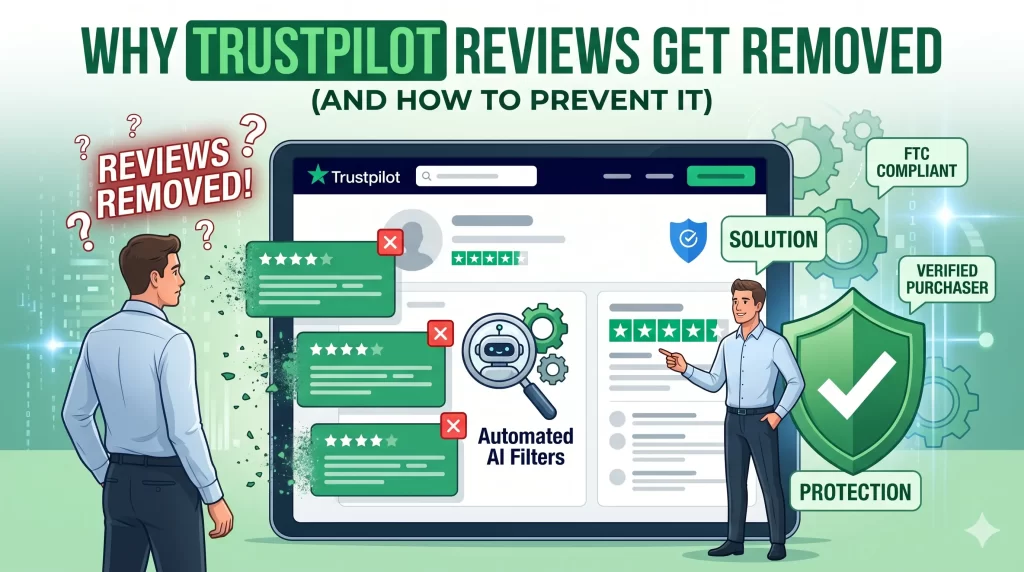
Trustpilot Review Removal happens automatically when machine learning algorithms detect suspicious patterns like shared internet connections or sudden spikes in rating volume. The platform also deletes ratings permanently if a business violates policies by offering incentives or asking for feedback selectively. Understanding these strict rules helps protect your TrustScore.
The Mystery of the Vanishing 5-Star Rating: Are Automated Filters Hurting Your Brand?
You check your business profile and see your hard earned positive feedback is completely gone. You start asking yourself why Trustpilot reviews get removed so often. The answer lies in the automated detection system.
Think of Trustpilot’s algorithm like a very strict nightclub bouncer. This bouncer checks every single person at the door. If the bouncer sees anything slightly suspicious, it kicks the person out immediately. This aggressive filtering creates massive False Positives. Your real, paying customers get caught in the crossfire.
This automated process relies heavily on advanced Neural Networks to scan millions of data points. These systems make frequent mistakes and cause severe Brand Suppression for innocent companies. As experts at Bulk PVA Services, we see business owners lose thousands of dollars in revenue because of these automated errors. Building a strong Online Reputation Management (ORM) strategy requires you to understand exactly how this digital bouncer thinks.
Behind the Purge: Why Trustpilot’s Algorithm Deletes Legitimate Feedback
The platform maintains a strict set of rules to keep its ecosystem clean. The Content Integrity Team acts as the human backup to the Automated Fraud Detection artificial intelligence. They look for specific violations of their everyday guidelines.
If your genuine customers make a simple formatting mistake, the system will erase their contribution. Here are the most common triggers for deletion:
- Sharing Private Details: The system removes any review containing Personally Identifiable Information (PII) like phone numbers, home addresses, or employee full names.
- Selective Invitations: You cannot ask only happy customers for feedback. The system calls this Review Gating and will penalize your profile.
- Inappropriate Language: The automated filters instantly block hate speech, personal threats, and heavy profanity.
- Abusing the System: If a business misuses the Flagging Tool to hide legitimate bad feedback, the platform will place a massive red Consumer Warning banner on their public page.
The B2B Corporate IP Trap: When Shared Networks Trigger AI Flags
Many business to business companies face a unique technical problem. We call this the corporate network trap. The algorithm looks closely at the internet connection of the reviewer.
If multiple positive reviews come from the exact same network connection, the system triggers a severe warning for IP Clustering. Maintaining proper B2B Compliance requires you to understand this technical blind spot. The system cannot tell the difference between a malicious bot and a group of happy coworkers.
| What the AI Sees | What Actually Happened |
| A fake review ring trying to manipulate ratings artificially. | Ten employees at a client’s corporate office loved your service. |
| A paid click farm operating from a single geographical location. | You hosted a live event and guests used your free public Wi-Fi. |
| Suspicious batch uploading of fabricated customer feedback. | A corporate procurement team submitted reviews during their lunch break. |
Navigating the FTC Fake Review Rule and Strict Incentive Bans
The United States government recently cracked down hard on fake online feedback. In 2026, the new FTC Fake Review Rule enforces massive financial penalties for platform manipulation. Platforms are acting very conservatively to avoid these legal fines.
You absolutely cannot offer a discount, a free gift, or a refund in exchange for a positive rating. The platform classifies these as Incentivized Reviews. Imagine trying to bribe a traffic cop to avoid a speeding ticket. The cop will immediately write you a much larger ticket. The automated filters work the exact same way. If the system detects any hint of a bribe, it deletes the feedback immediately and flags your account for further investigation.
The 3-Day Verification Window: How to Rescue Flagged Reviews
When the platform suspects a problem, the clock starts ticking immediately. You have a very short window to prove the rating is real. The reviewer will receive an email asking for a Proof of Purchase. They have exactly 72 hours to respond to this request.
Many business owners wonder exactly why Trustpilot reviews get removed during this specific stage. It happens simply because the busy customer ignored the verification email. If they miss this deadline, the system deletes the rating permanently. Here is exactly how to guide your customers through this tight window:
- Reach out immediately: Contact the customer directly outside of the review platform the moment their rating gets flagged by the system.
- Explain the urgency: Tell them they have exactly three days to submit their receipt to become a Verified Purchaser.
- Provide clear documentation: If the customer lost their receipt, email them a copy of their invoice right away. Proper Documenting Transactions saves your ratings from permanent deletion.
- Instruct them on submission: Tell the customer to reply directly to the verification email from the platform and attach their invoice clearly.
The AI-Resistant Compliance Shield: Bulletproof Strategies to Protect Your TrustScore
You cannot stop the automated system from scanning your profile. You can build a strategy that prevents the system from making mistakes in the first place. At Bulk PVA Services, we recommend setting up a permanent defense shield for your business.
Instead of constantly fighting the artificial intelligence, you need to change how you collect feedback. Follow these steps to keep your ratings safe and fully compliant:
- Ask clients to use mobile data: Tell your corporate clients to disconnect from their office Wi-Fi before submitting feedback. This simple step completely avoids the shared network trap we discussed earlier.
- Automate your requests: Use official API integrations to send review invitations immediately after a purchase. This automatically marks them as verified and skips the manual checks.
- Keep records of everything: Store your customer invoices securely for at least twelve months. You will need these records ready if the system randomly audits your account.
- Never offer rewards: Train your customer service team to never offer discounts to angry customers in exchange for changing a bad rating.
Final Words: Taking Back Control of Your Online Reputation
You now understand why Trustpilot reviews get removed and the strict rules governing the platform. The automated system acts like a ruthless digital gatekeeper. It will delete legitimate feedback if you make a tiny technical mistake.
You do not have to let a machine destroy your hard work. By implementing a strict compliance strategy, you protect your brand from sudden rating drops. Document your transactions carefully and guide your customers through the verification process. If you need professional help setting up these defensive systems or require secure Trustpilot review services, our expert team stands ready to assist you.
Frequently Asked Questions
Can a competitor flag my reviews to get them deleted?
Yes. Anyone can use the public reporting feature to flag your feedback. However, they must specify a valid policy violation. If they abuse this feature repeatedly, the platform will restrict their account.
How long does the content integrity team take to review an appeal?
The manual investigation process usually takes between two to seven business days. The exact time depends on the current backlog of tickets.
Will the platform restore a review if I provide the invoice later?
No. If the customer misses the strict three day verification window, the system deletes the rating permanently. You cannot appeal the decision after the deadline passes.
Why did my rating disappear without any warning email?
The automated spam filters delete extremely suspicious feedback instantly without sending warnings. This usually happens if the system detects an IP address known for bot activity.
Does paying for a premium business account stop the automated deletions?
Absolutely not. The platform applies the exact same fraud detection algorithms to both free and paid accounts. Upgrading your account will not protect you from policy violations.